
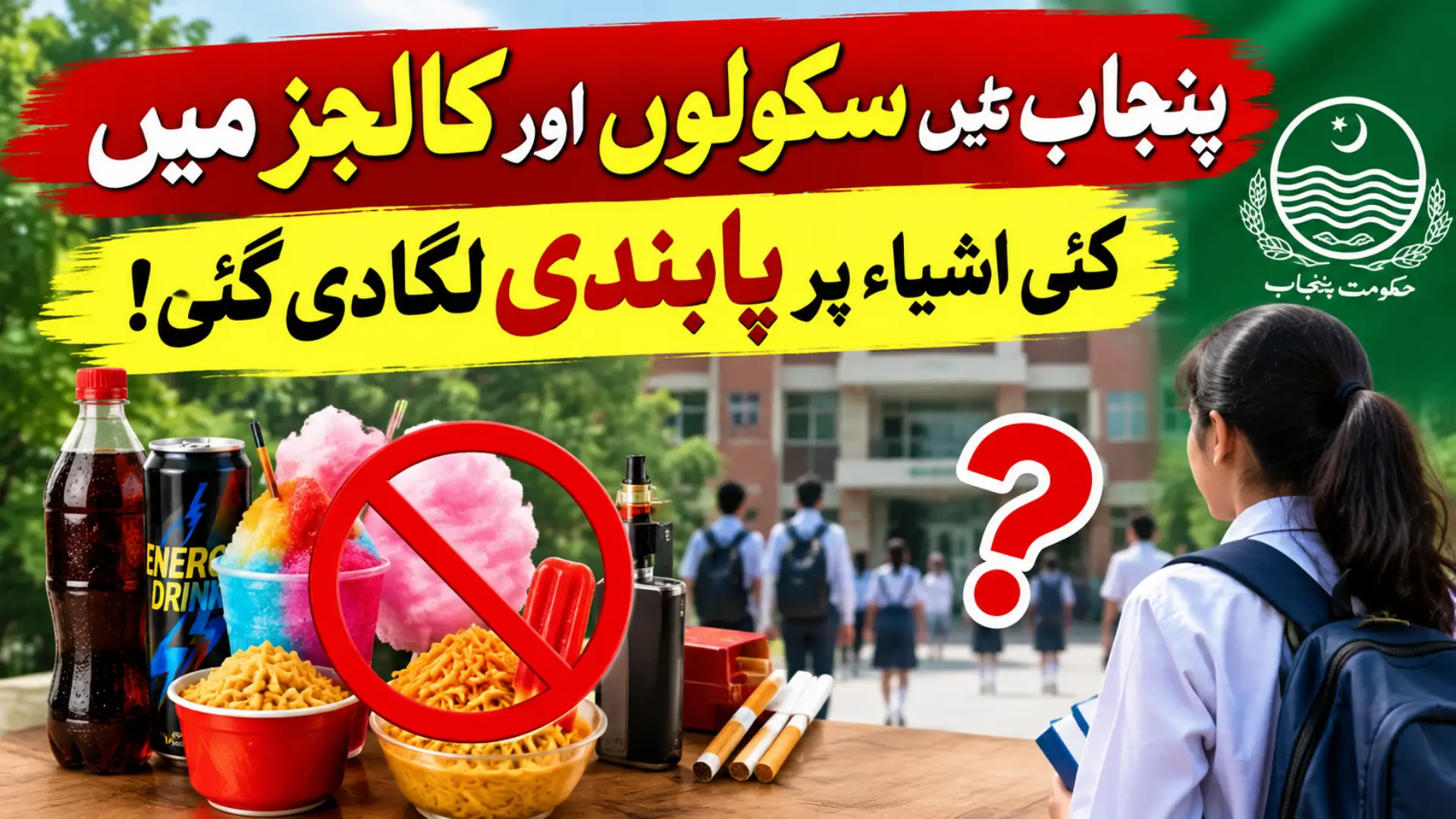
Punjab Announces Ban on Several Items in Schools, Colleges and Universities
Punjab Announces Ban on Several
Punjab Announces Ban on Several Items Punjab government has introduced amended food quality regulations banning the sale of several drinks, snacks, tobacco products and vapes in educational institutions across the province. The prohibited items include carbonated drinks, energy drinks, artificial beverages, products containing monosodium glutamate (MSG), cotton candy, gola ganda and ice lollies.

The rules, published in the Punjab Gazette according to the supplied information, apply to schools, colleges, universities and other educational institutions. They also extend to food businesses operating within a 100-meter radius of educational institutions. The changes aim to encourage healthier eating habits among students and limit the availability of products with low nutritional value.
You Can Also Read: ICT Police Hajj and Umrah Welfare Scheme 2026
Which Items Are Banned in Punjab’s Educational Institutions?
Under the amended regulations, several popular drinks and snacks are included in the list of prohibited items. The restrictions also cover tobacco products and vapes, meaning the rules are not limited to food and beverages alone.
The reported prohibited items include:
- Carbonated drinks and soft drinks
- Energy drinks
- Artificial beverages
- Products containing monosodium glutamate (MSG), commonly known as Chinese salt
- Cotton candy
- Gola ganda
- Ice lollies
- Tobacco products
- Vapes
Students and parents should note that this list reflects the information provided about the amended regulations. For the complete legal wording and any product-specific conditions, educational institutions and vendors should consult the published notification.
New Food Regulations Apply to Schools, Colleges and Universities
The amended rules apply across Punjab’s educational institutions, including schools, colleges, universities and other covered facilities. School canteens and university cafeterias will need to review the products they sell to ensure compliance with the new requirements.
The purpose of the changes is to encourage healthier food choices among students. By restricting the sale of selected products with low nutritional value, the government aims to improve the food environment in and around educational campuses.
The rules are also relevant to institutional administrations and canteen operators who manage food services. They should check the complete regulations rather than relying only on a short list of prohibited items.
Shops Within 100 Meters of Educational Institutions Are Also Affected
One important feature of the amended regulations is their extension beyond campus boundaries. According to the supplied information, food businesses operating within a 100-meter radius of educational institutions must also comply with the new requirements.
This means the rules are relevant not only to school canteens and college cafeterias but also to nearby food outlets. Shopkeepers selling drinks, snacks or other covered products near educational institutions should review their stock against the official regulations.
The exact enforcement arrangements, any applicable exceptions and penalties for violations have not been specified in the information available here. Businesses should therefore confirm these details with the relevant authorities before making assumptions about their legal obligations.
What Do the Green, Yellow and Red Food Categories Mean?
The amended regulations introduce a three-category system to classify food according to its nutritional value. The categories are green, yellow and red, with nutritious foods placed in the green category.
The system is intended to help distinguish food items according to their nutritional value and support healthier choices in educational settings. However, the supplied information does not provide the full classification criteria or identify every food item assigned to the yellow and red categories.
Canteen operators and school administrations should obtain the official classification list before deciding which products may be sold. They should not assume that every item belongs to a particular category without checking the published rules.
What the New Rules Mean for Students, Parents and Canteen Owners
For students, the regulations may change the drinks and snacks available during school breaks and on campus. Parents can support healthier eating habits by discussing suitable food choices with their children and checking school guidance about permitted items.
Educational institutions and food vendors also have practical steps to take. They should review their existing menus, product stocks and purchasing arrangements against the amended regulations.
Before making changes, the following points should be checked:
- Obtain the complete list of prohibited products.
- Review the green, yellow and red food classification criteria.
- Confirm how the 100-meter rule applies to the business or institution.
- Check the official instructions regarding enforcement and penalties.
These steps can help schools and vendors understand the requirements without relying on incomplete summaries.
Where Can You Check the Official Punjab Food Ban Notification?
The supplied information states that the amended regulations were published in the Punjab Gazette. The Gazette notification is the appropriate reference for confirming the legal wording, scope of the restrictions and any additional compliance requirements.
Readers should seek the published notification through the relevant Punjab government or food authority channels. A specific notification number or direct official document link was not included in the information provided for this article.
Until the complete notification is reviewed, details such as fines, inspection procedures, implementation dates and product-specific exceptions should not be treated as confirmed.
Frequently Asked Questions
1. Which drinks are banned in Punjab’s schools and colleges?
The reported restrictions include carbonated drinks, energy drinks and artificial beverages. Products containing MSG are also included in the supplied list of prohibited items.
2. Are vapes and tobacco products included in the ban?
Yes. The supplied information lists tobacco products and vapes among the prohibited items covered by the amended regulations.
3. Does the ban apply to shops near schools?
The reported rules extend to food businesses operating within a 100-meter radius of educational institutions. Vendors should check the official notification for the exact requirements.
4. What is the green, yellow and red food classification system?
It is a system introduced to classify food according to nutritional value. The supplied information identifies nutritious foods as belonging to the green category but does not provide the complete criteria for all three categories.
5. Where can schools and shopkeepers check the complete rules?
They should consult the amended regulations published in the Punjab Gazette through the relevant official government or food authority channels.
Conclusion
Punjab’s amended food regulations introduce restrictions on selected drinks, snacks, tobacco products and vapes in educational institutions, while also extending requirements to food businesses within 100 meters of campuses. The new green, yellow and red classification system is intended to support healthier food choices among students.
Schools, universities, canteen operators and nearby vendors should review the complete Punjab Gazette notification to understand which products are covered and what compliance measures are required. Details such as penalties and enforcement procedures should be confirmed from the official rules before publication or action.






2 Comments